Which bike route to choose in Cusco according to your level
Choosing a bike route in Cusco does not depend only on the scenery you want to explore. You should also consider your experience, fitness level, acclimatization to the altitude, available time, and confidence riding on dirt roads or mountain descents.
Cusco offers relaxed rides near the city, cultural routes through the Sacred Valley, electric bike tours, and MTB or enduro trails for experienced riders. This guide will help you identify which option best matches your skill level.
Quick comparison of bike routes in Cusco
Skill level
Type of route
Recommended routes
Beginner
Relaxed roads, a moderate pace, and few technical sections
City Tour, Huayllarcocha, Maras and Moray, Sacred Valley
Beginner with electric assistance
Assisted climbs and less physical effort at high altitude
Cusco E-Bike City Tour, Cusco and Sacred Valley by e-bike
Intermediate
Mountain roads, descents, and uneven terrain
Lares, Yuncaypata, Lamay
Advanced
Technical descents, curves, rocky terrain, and enduro trails
Inca Avalanche, La Máxima, Chinchero, Patacancha, and Pumamarca
How do you know your biking skill level in Cusco?
Before choosing a route, think honestly about your experience. Occasionally riding a bicycle around a city is very different from controlling a mountain bike on dirt trails, tight turns, or rocky descents.
Beginner level
You are a beginner if you know how to ride a bike but do not ride regularly or have no mountain biking experience. It is best to start with short routes, wide roads, limited climbing, and the assistance of a guide.
Intermediate level
You have an intermediate skill level if you ride somewhat regularly, can control your bike on uneven terrain, and are comfortable with moderate descents. At this level, you can consider MTB routes with manageable technical sections.
Advanced level
Advanced routes require previous MTB or enduro experience. You should feel comfortable on steep descents, tight turns, steps, rocky terrain, and rapidly changing trail conditions. These routes are not suitable for learning from scratch.
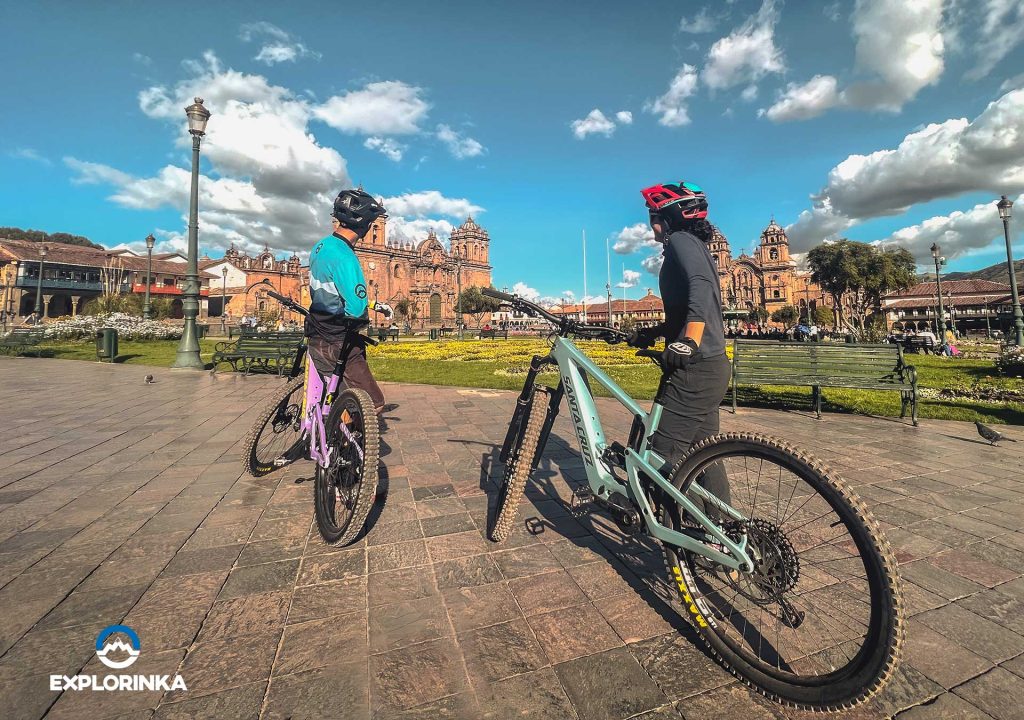
Electric bikes help riders manage their effort during climbs.
Bike routes for beginners
For your first biking experience in Cusco, choose a route near the city or a cultural ride through the Sacred Valley. These options let you enjoy the scenery without immediately entering technical trails.
Cusco Bike City Tour
This is a suitable option for visiting nearby archaeological sites such as Sacsayhuamán, Qenqo, Tambomachay, Puca Pucara, and Inkiltambo. The route covers approximately 20 kilometers and combines urban roads, rural paths, and cultural visits.
Cusco Electric Bike City Tour
The e-bike version is recommended if you want to reduce the effort required on uphill sections. It allows you to visit places such as Sacsayhuamán, Qenqo, Tambomachay, and the San Cristóbal viewpoint during an approximately four-hour ride.
Huayllarcocha
This is a short and easy half-day ride. It can be a good first experience before taking on longer routes through the Sacred Valley.
Maras and Moray by bike
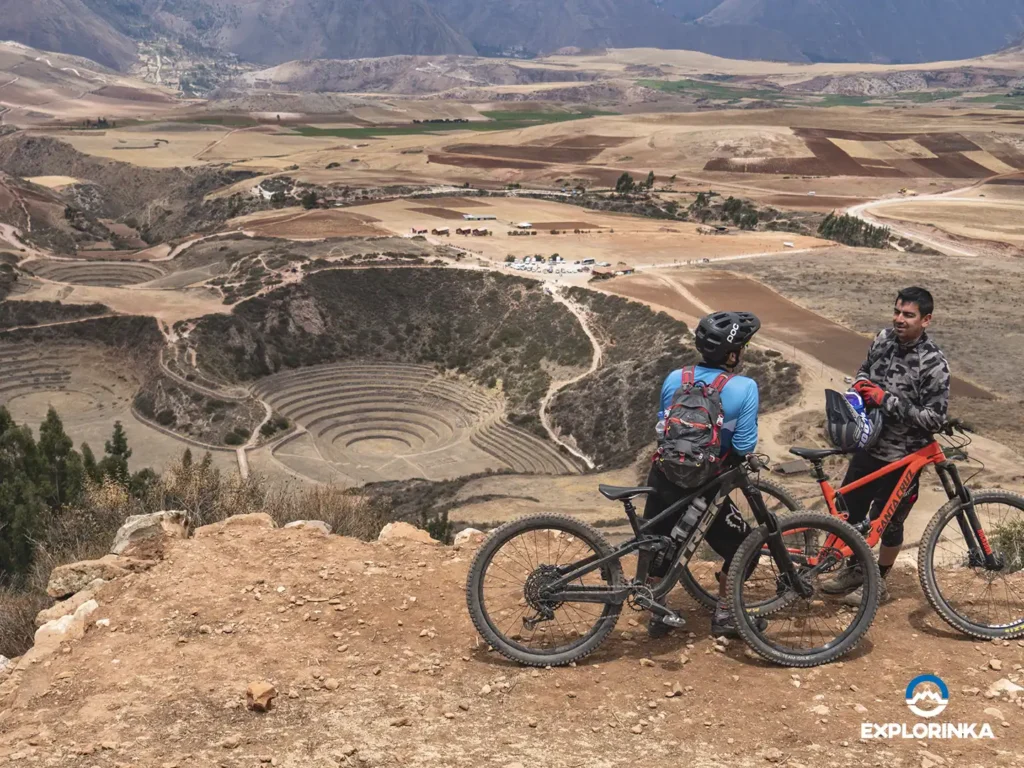
This route combines scenery, culture, and physical activity. It passes through agricultural areas, Huaypo Lagoon, Moray, and the Maras Salt Mines. The route covers approximately 30 kilometers and does not require previous mountain biking experience.
A bike ride through the agricultural landscapes of Maras and Moray.
Sacred Valley by bike
This is a good option for travelers who prefer a relaxed ride through villages, farmland, and areas near the Urubamba River. The route may include places such as Pisac, Urubamba, Pachar, and Ollantaytambo.
Routes for intermediate riders
Intermediate routes include mountain roads, longer descents, and uneven surfaces. Although they are not always extreme, they require greater bike control and an appropriate level of fitness.
Lares by bike
Lares combines mountain scenery, alpacas and llamas, flowing trails, and some sections with rocks or steps. Depending on the section, the difficulty can range from easy-to-moderate to intermediate.
Yuncaypata and Lamay
These routes may be suitable for cyclists who already have mountain biking experience and want a more dynamic ride. Before booking, tell the tour operator about your experience with descents and mountain trails.
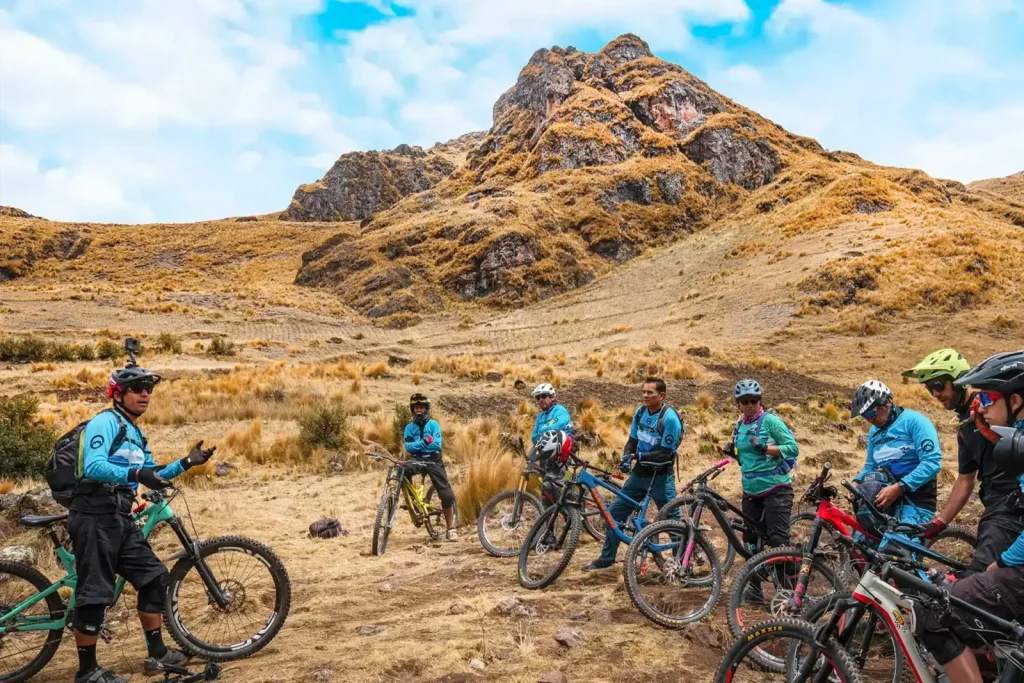
Mountain biking route in Lares.
Enduro routes for advanced riders
Enduro riding includes technical descents, tight turns, changing terrain, and sections where previous experience is essential. You should not choose an enduro route based only on the scenery or duration.
Advanced options include Inca Avalanche, La Máxima, Chinchero, Patacancha, Pumamarca, and some complete Yuncaypata or Lamay circuits. The exact difficulty may vary depending on the trail, terrain conditions, and weather.
Before confirming an advanced route, ask what type of bike will be used, which protective equipment is included, how much elevation change the route has, and what technical sections you will encounter.
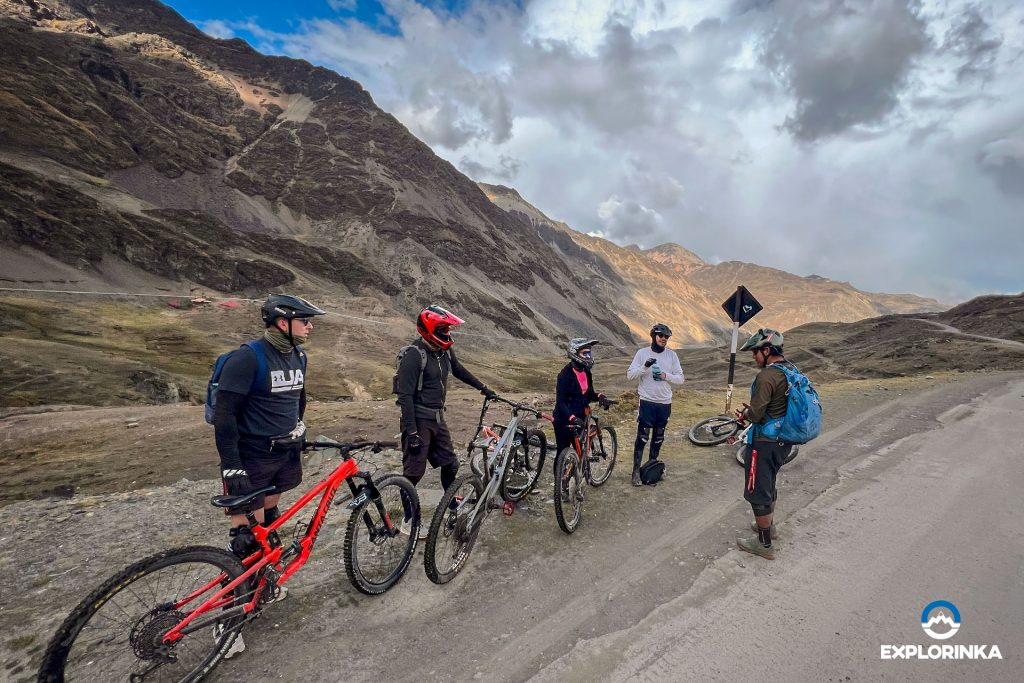
Enduro routes require previous experience and strong bike-handling skills.
When should you choose an electric bike?
An electric bike is recommended when you want to enjoy an outdoor activity without letting the climbs or high altitude demand all your energy. Electric assistance does not eliminate pedaling, but it helps you regulate your effort.
It can be a good choice for travelers who have just arrived in Cusco, couples with different fitness levels, families, or people who do not ride frequently. It also allows you to cover longer distances while saving energy for sightseeing and stops along the way.
Which route to choose based on your available time
Half day: Huayllarcocha, the Cusco E-Bike City Tour, or Yuncaypata with a culinary experience.
Full day: Maras and Moray, the Sacred Valley, Lares, or MTB circuits.
Two or three days: Ausangate, Rainbow Mountain, or combined trekking and biking programs.
Four days or more: Machu Picchu, Manu, or complete MTB and enduro circuits.
How Cusco’s altitude affects your ride
The altitude can increase fatigue, especially during your first few days. For this reason, choosing a demanding route immediately after arriving is not recommended.
On your first day, consider a short ride, an easy route, or an electric bike. Save high-altitude routes, Ausangate, and technical descents until after you have acclimatized.
Five questions to ask before choosing your route
Do I ride a bike regularly or only occasionally?
Do I have experience on dirt roads and descents?
How many days have I spent acclimatizing in Cusco?
Do I prefer a cultural, scenic, or technical experience?
Do I want a physically demanding ride, or would I prefer electric assistance?
After answering these questions, you will be able to compare the available options more easily. To review departures, routes, and complete programs, contact us at info@explorinka.com.
What to bring for a bike route in Cusco
Comfortable clothing suitable for physical activity.
A windbreaker or lightweight jacket.
Sunscreen and sunglasses.
Water and a personal snack.
Shoes with good traction.
A waterproof jacket during the rainy season.
Check in advance which items the tour operator provides. Depending on the route, the service may include a bike, helmet, gloves, protective equipment, transportation, and a specialized guide.
Frequently asked questions
Which bike route should I choose on my first day in Cusco?
The safest choice is a short, low-intensity route such as Huayllarcocha, a City Tour, or an electric bike ride. This allows you to stay active without putting too much strain on your body while you adjust to the altitude.
Do I need experience to bike through Maras and Moray?
You do not need advanced mountain biking experience. However, you should know how to ride a bike, brake safely, and follow the guide’s instructions throughout the route.
Is an MTB or an e-bike better in Cusco?
A mountain bike is suitable if you want greater contact with the terrain and have a good fitness level. An e-bike is better if you want to reduce the effort required on climbs or are still adjusting to the altitude.
Which routes are suitable for experienced cyclists?
Lares, Lamay, Patacancha, Pumamarca, Inca Avalanche, and La Máxima may be good options. Your final choice should depend on your technical experience and the tour operator’s assessment.
How many days do I need?
With half a day, you can complete a route near the city. With a full day, you can visit Maras, Moray, the Sacred Valley, or Lares. To combine biking with Machu Picchu, Ausangate, or Manu, you will need between two and five days or more.
Choose a route that matches your experience
The best bike route in Cusco is not always the longest or most technical one. It is the route that matches your experience, acclimatization to the altitude, and the type of trip you want to enjoy.
Start with an easy route if you ride only occasionally, consider an e-bike if you want to manage your effort, and save enduro routes for when you have genuine experience on mountain trails.